
Context
Recruiters often move through disconnected, repetitive steps to fill a role: translate a requirement into searches across resume sources, review many profiles, compare candidates across several qualification dimensions, explain a shortlist and draft similar outreach messages. Keyword-only search may overlook relevant experience expressed in different language, while high application volumes make consistent first-pass review difficult.
Solution
Accepts an uploaded job description and uses its role requirements as the basis for candidate search and matching.
Combines the job description with the selected resume source and location, then keeps the confirmed matching criteria visible for recruiter review.
Searches the selected resume source, retrieves matching profiles and communicates processing progress as candidates are assessed.
Structures resume content into reviewable candidate information, including role, location, experience, education, certifications, projects and source details.
Evaluates role fit across skills, experience, education, certifications and semantic relevance rather than relying on exact keyword matching alone.
Provides an AI-generated explanation of candidate strengths and potential gaps so recruiters can understand the reasoning behind each score.
Prepares role-aware candidate outreach with editable recipient, subject and message fields.
Keeps shortlisting and communication under recruiter control by requiring human review before outreach is sent.
Potential benefits
Benefits are working hypotheses to validate against the target data, workflow and operating environment.
- Accelerates candidate sourcing and first-pass review
- Reduces repetitive resume screening
- Provides consistent multidimensional comparison
- Surfaces candidates beyond exact keyword matches
- Makes recommendations explainable
- Speeds personalized candidate outreach
- Reduces workflow switching
- Preserves recruiter judgment and approval
Where TalentScout Can Be Used
- Candidate Sourcing
- Resume Screening
- Role-to-candidate Matching
- Talent-pool Search
- Candidate Ranking
- Skills and Experience Comparison
- Explainable Shortlisting
- Recruiter Outreach
- High-volume Hiring
- Specialist-role Hiring
- Internal Talent Mobility
- Recruitment Operations
Product workflow
Prototype screens use demonstration data and illustrate the workflow rather than a production deployment. Interfaces and outputs are configured for each organization.
Third-party names and interfaces, where visible, identify demonstration context only. Their marks belong to their respective owners and do not imply endorsement or partnership.
TalentScout Recruitment Journey
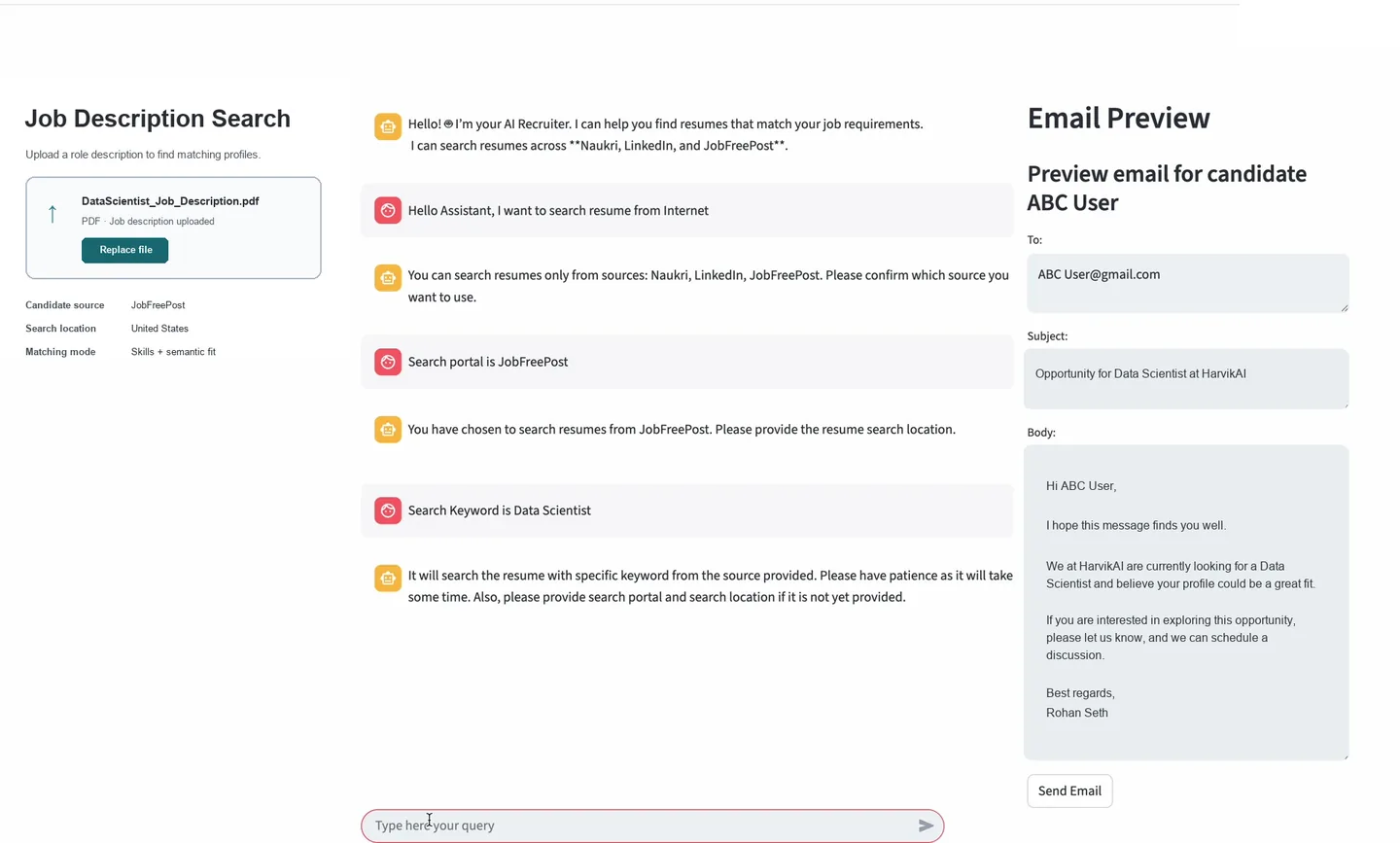
1. Start with the job description
The recruiter uploads the Data Scientist job description and selects the candidate source and location. TalentScout uses the document as the reference for skills and semantic matching, reducing the need to translate the role into isolated search keywords.
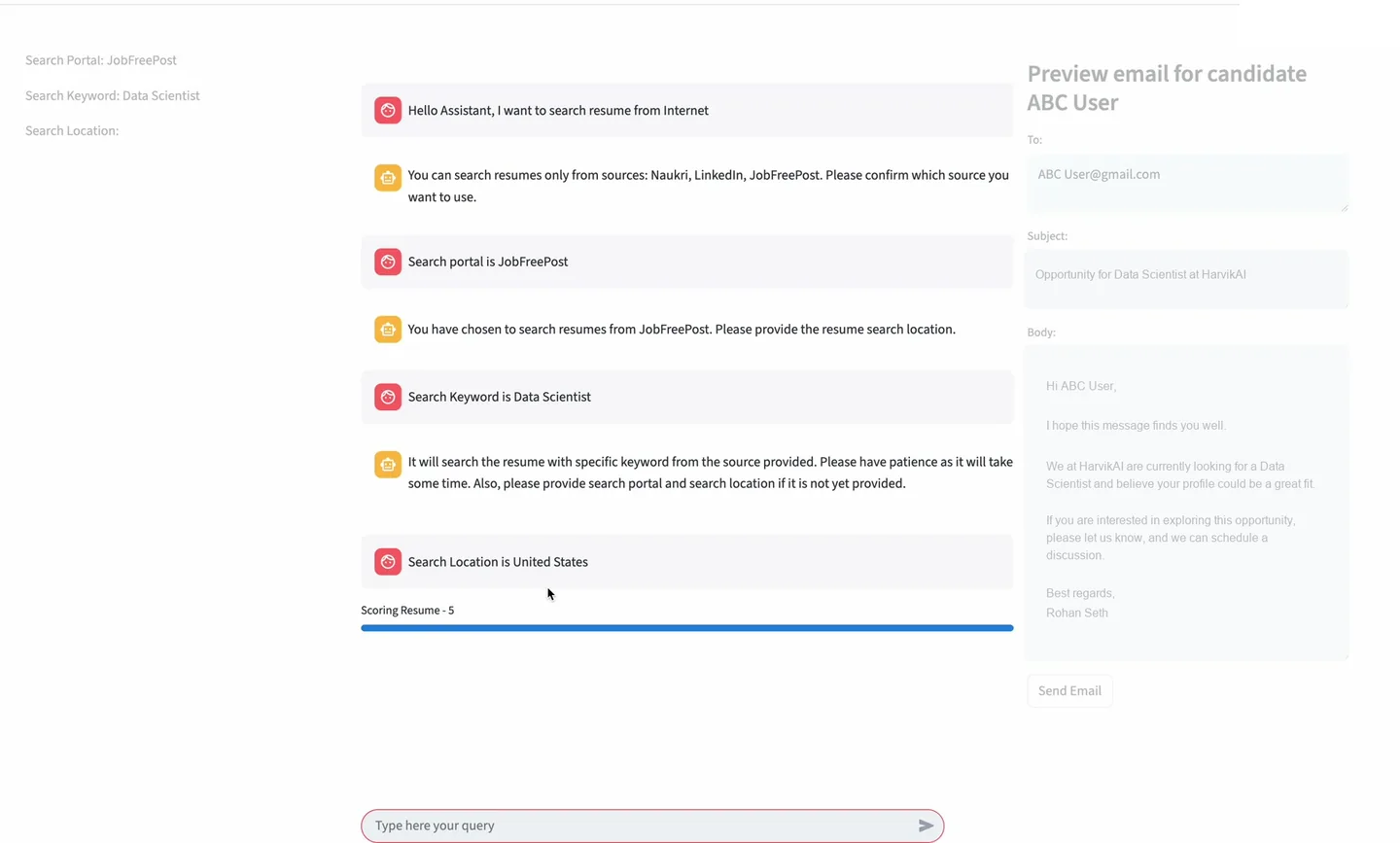
2. Retrieve and process matching profiles
Once the criteria are complete, the application retrieves candidate resumes and scores them sequentially. Progress remains visible so the recruiter knows that the candidate set is still being evaluated.
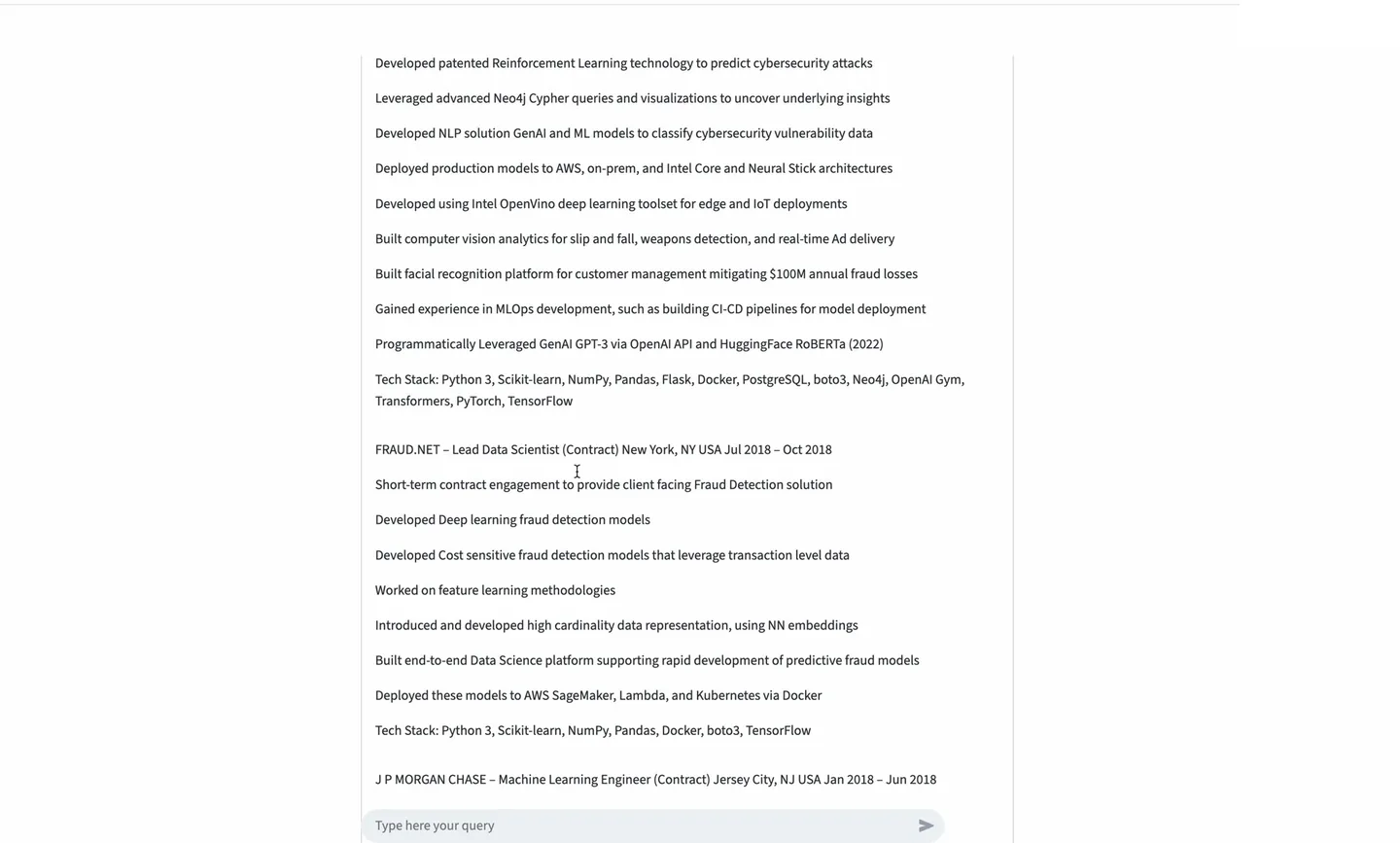
3. Review the evidence behind the profile
The candidate card exposes the source resume and parsed details, allowing the recruiter to inspect experience, education, certifications and projects without losing the context of the search workflow.
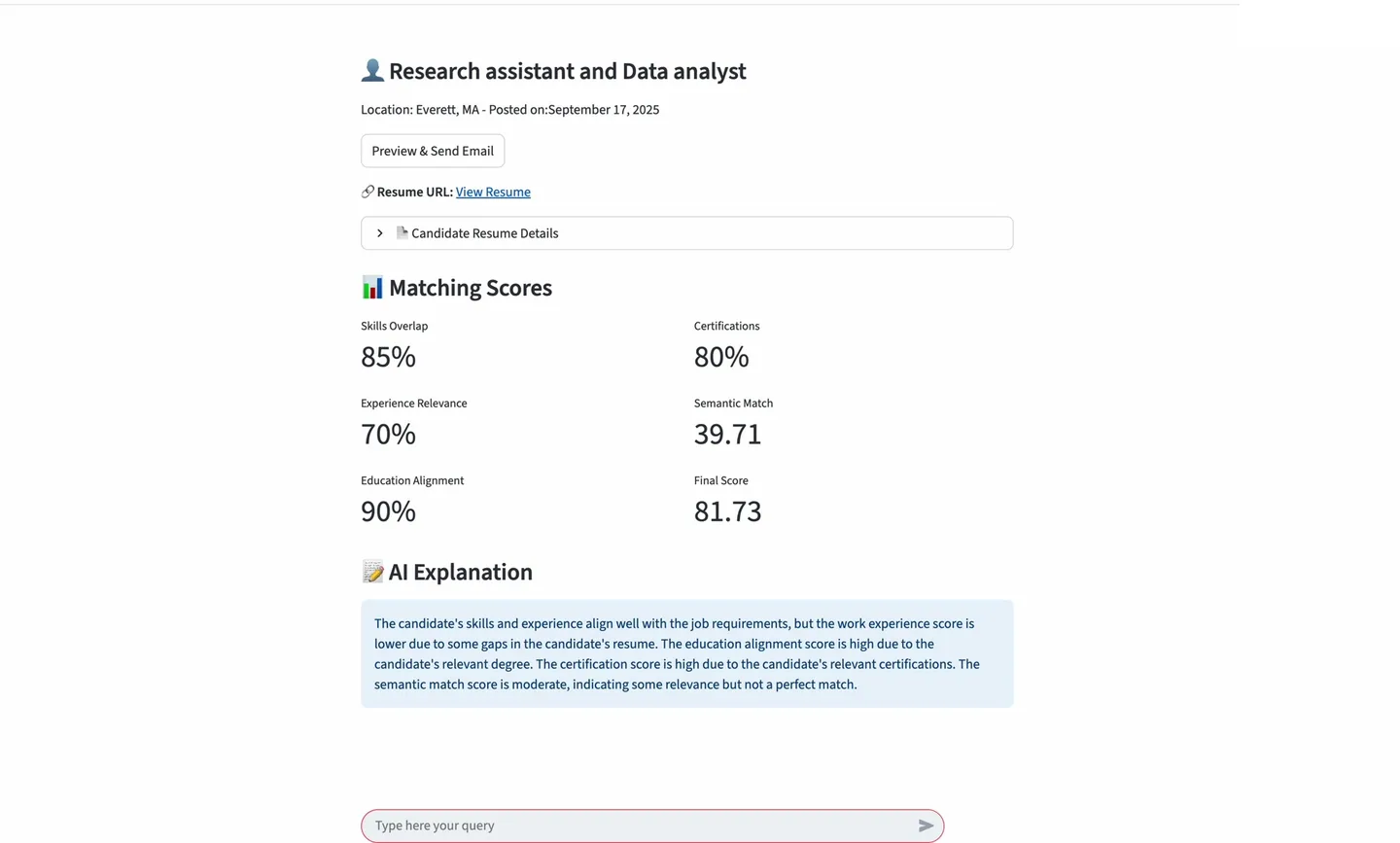
4. Understand candidate fit and gaps
Visible scores separate skills, experience, education, certifications and semantic relevance. The AI explanation adds plain-language context so the recruiter can investigate strengths and weaker areas before making a decision.
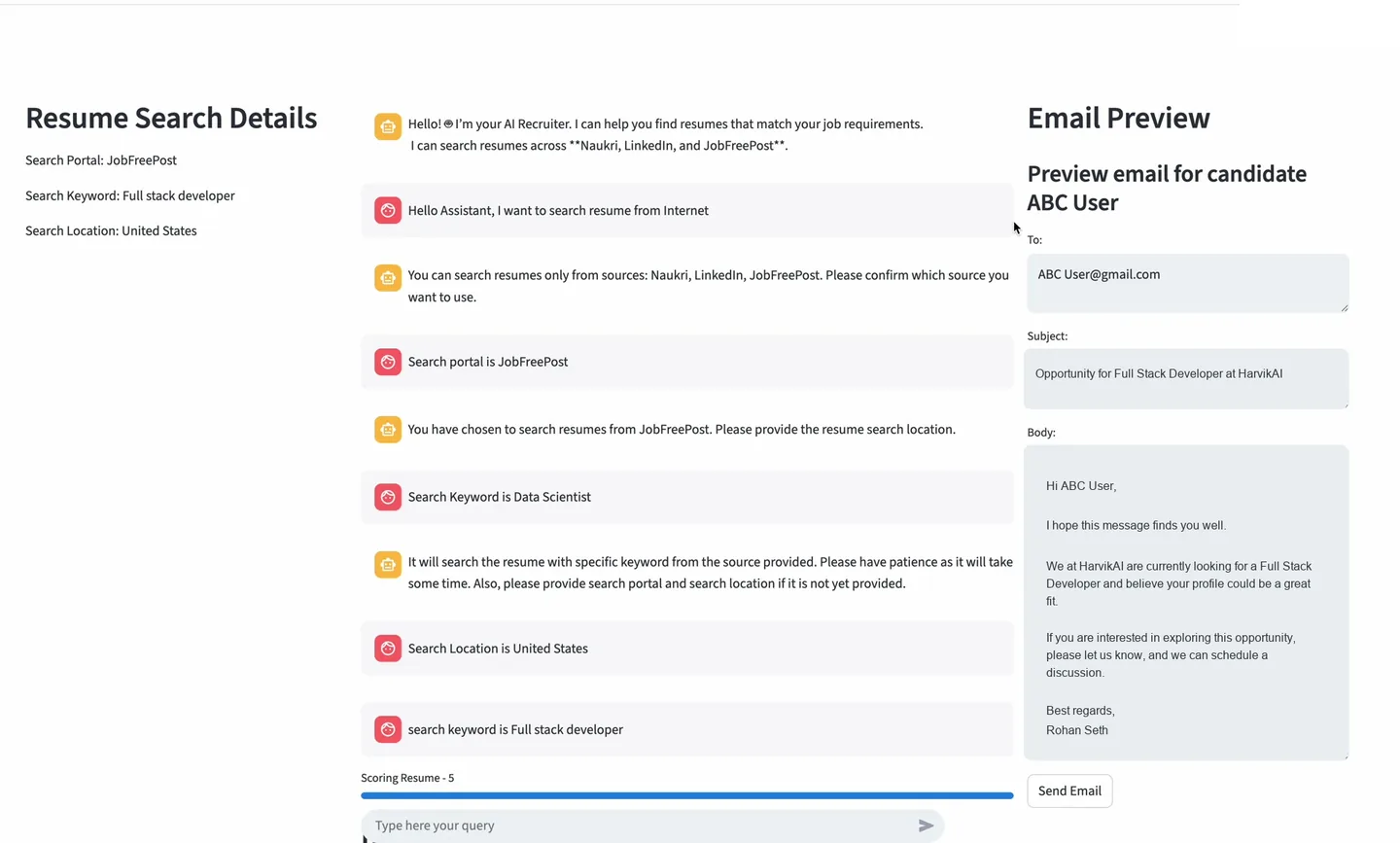
5. Engage the candidate with human approval
TalentScout drafts a role-aware outreach email, but the recipient, subject and body remain editable. The recruiter retains final control over the message and whether it is sent.
How this implementation works
- The recruiter uploads the Data Scientist job description that will be used as the reference for candidate search and role-fit assessment.
- TalentScout combines the uploaded requirements with the selected resume source, location and skills-plus-semantic matching mode before candidate retrieval begins.
- TalentScout searches the selected source, retrieves matching resumes and processes each profile while showing progress to the recruiter.
- Resume content is parsed and organized into a reviewable candidate profile containing work experience, education, certifications, projects and other relevant evidence.
- Each candidate is evaluated across skills, experience, education, certifications and semantic match. These components are combined into a visible final score.
- An AI explanation summarizes the evidence supporting the recommendation and highlights potential gaps that require recruiter consideration.
- For a candidate the recruiter wants to engage, TalentScout prepares an editable, role-specific email with recipient, subject and message content.
- The recruiter reviews the candidate evidence and outreach before deciding whether to shortlist, edit the message or send it. The application supports recruiter judgment rather than replacing it.
Responsible deployment
Production use requires fit-for-purpose evaluation, privacy and security controls, clear human accountability, monitored performance, and a fallback for uncertain or harmful outputs.
- Keep recruiters accountable for every sourcing, scoring and outreach decision; do not make automatic employment decisions.
- Notify candidates appropriately and test ranking quality for protected-group disparities and proxy features.
- Provide a route to correct source data, challenge conclusions and request human review.