
Context
Paper documents, scanned files and inconsistent digital formats interrupt otherwise connected business processes. Manually reading invoices, entering header and line-item data, validating values and reconciling records is slow, repetitive and vulnerable to transcription errors. These analog and semi-structured documents become a barrier to automation, timely reporting and auditability.
Solution
Accepts scanned documents, PDFs and image files through a common document-intake workflow.
Preprocesses each document to improve readability and prepare it for text and layout recognition.
Uses optical character recognition and document intelligence to extract digital content from invoice headers, addresses, dates, references, totals and line-item tables.
Post-processes and validates extracted values, applying field-level rules and surfacing exceptions for review.
Structures information into separate invoice-master and invoice-item records for reliable downstream use.
Stores source documents, extracted text and structured data with configured access and retention controls to preserve traceability between every record and its evidence.
Supports reconciliation by comparing extracted document values with related transaction or enterprise-system records.
Provides reviewable outputs that can feed finance, procurement, operations, analytics and workflow-automation systems.
Potential benefits
Benefits are working hypotheses to validate against the target data, workflow and operating environment.
- Reduces repetitive document entry
- Improves extraction accuracy and consistency
- Accelerates validation and reconciliation
- Creates traceable, machine-readable records
- Enables downstream workflow automation
- Strengthens review and audit readiness
Where IntelliDoc Can Be Used
- Invoice Processing
- Purchase-order Capture
- Receipt Extraction
- Form Digitization
- Claims Processing
- Contract Data Extraction
- Delivery-document Processing
- Statement Reconciliation
- Compliance-document Review
- Archive Modernization
- Accounts-payable Automation
- Back-office Operations
Product workflow
Prototype screens use demonstration data and illustrate the workflow rather than a production deployment. Interfaces and outputs are configured for each organization.
Third-party names and interfaces, where visible, identify demonstration context only. Their marks belong to their respective owners and do not imply endorsement or partnership.
Invoice-to-Structured-Data Workflow
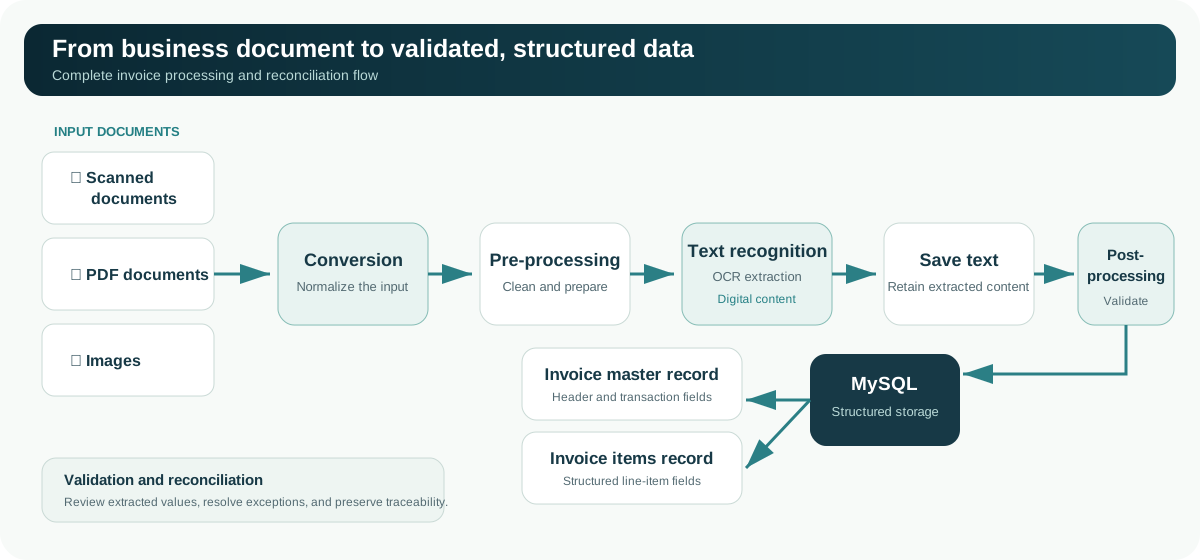
Connect every stage of document processing
IntelliDoc covers document intake, conversion, preprocessing, optical character recognition, text retention, post-processing and structured storage. Validation and reconciliation extend the flow from simple digitization to usable business data.
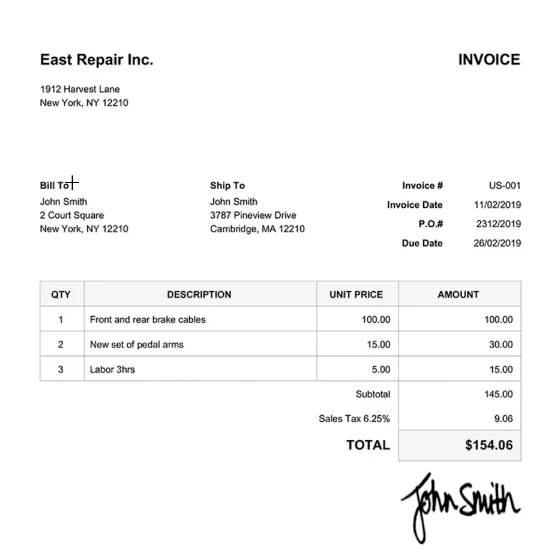
Accept semi-structured business documents
The source invoice combines addresses, transaction references, dates, a line-item table, tax and total values. IntelliDoc must interpret these different information regions within one document.
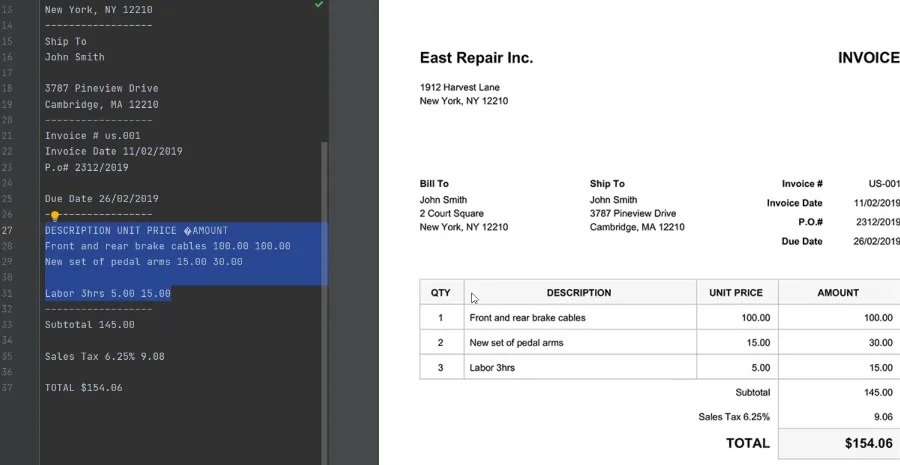
Make extracted content reviewable
The side-by-side view makes it possible to compare recognized text with the original invoice, supporting quality checks and preserving evidence for corrected or disputed fields.
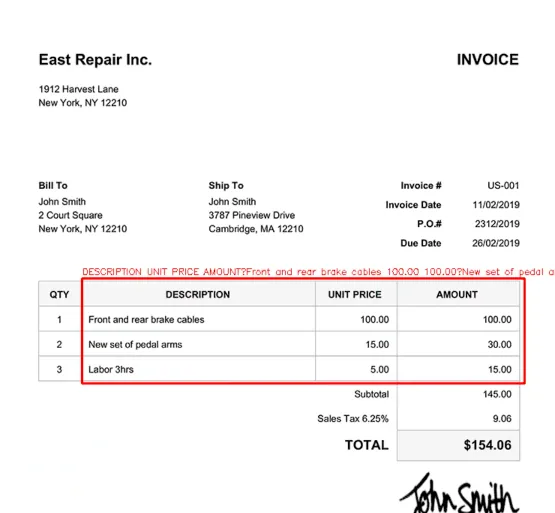
Understand document structure
IntelliDoc identifies the line-item region and separates descriptions, unit prices and amounts so the table can be transformed into structured transaction records rather than retained as unorganized text.
Prepare trusted data for downstream systems
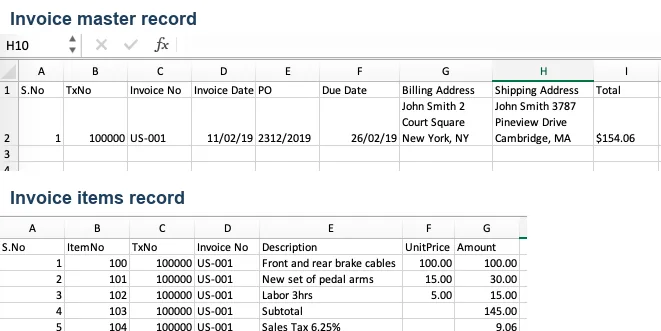
Header fields become an invoice-master record, while each product or service becomes an invoice-item record. This structure supports validation, reconciliation, reporting and workflow automation.
How this implementation works
- Input documents enter the workflow as scanned records, digital documents or image files, allowing different source formats to follow one processing path.
- The conversion stage normalizes the source, and preprocessing improves image quality, orientation and readability before recognition begins.
- Text recognition converts the document into digital content. IntelliDoc uses optical character recognition to extract both free text and table content from the invoice.
- The extracted text is saved so that the original recognized output remains available for review and traceability.
- Post-processing interprets the recognized text, identifies business fields and validates values such as invoice number, dates, addresses, totals and line-item amounts.
- Structured header information is written to an invoice-master record, while descriptions, quantities, unit prices and amounts are written to invoice-item records.
- The structured records are stored in MySQL and remain linked to the original document and extracted content.
- Validation and reconciliation compare extracted values with expected rules or related business records, enabling exceptions to be reviewed before downstream processing.
Responsible deployment
Production use requires fit-for-purpose evaluation, privacy and security controls, clear human accountability, monitored performance, and a fallback for uncertain or harmful outputs.
- Validate output quality against representative data and agreed acceptance measures before production use.
- Keep an accountable person in control of consequential decisions and exception handling.
- Limit access, collection and retention to the documented business purpose.